Howdi, I’m Andrew, but most people call me Bolster
Rants, Rambles, and Reminders by a Jack of all Trades
There’s been a million thinkpieces about ‘AI took our entry level jobs, so where will tomorrow’s Seniors come from’, so I don’t want to add to them; just a short braindump from conversations I’ve been having with peers, superiors, students and teachers over the past few weeks. You can think of this as a spiritual successor to my ‘Being a DORC’ blog earlier in the year. But, it all comes down to a simple and unoriginal thought; to anti-phrase Yoda ...
This post was originally published in The AI Journal on August 19, 2026. Why the next chapter of AI security will be defined by tokenomics, sovereign models, and normalizing models as first–class software components. Every few weeks, someone asks me if the AI bubble is about to pop. That’s the wrong question to ask. There’s no single “bubble” that will pop and send us back to the pre-GPT ‘stone age’. Rather, there is an ecosystem of ‘AI bubbles’, each inflating on a different timeline, some combining and becoming more ‘stable’, others getting frothy and ready to pop, and each with very different consequences for the security leaders who have to live with the outcomes. ...
This post was originally published on DevOps.com on April 28, 2026. AI has already arrived in the software development lifecycle; not as a pilot program or controlled experiment, but as an everyday reality. Developers are using AI coding assistants to generate functions, refactor modules, review pull requests, and accelerate delivery, often in direct tension with corporate policies meant to limit or control that use. While it’s tempting to consider this some kind of ‘Shadow AI’ or ‘Governance Failure’, it is a signal of things to come in this brave new world of AI-accelerated software engineering. ...

Introduction This guide walks through my personal Claude Code configuration, enhanced with multiple Model Context Protocol (MCP) servers that integrate with various tools and data sources. While this represents my specific setup, it’s designed to be adaptable for any developer who wants to boost their AI-assisted development workflows. Yes, it was authored largely by Claude, but reviewed by me. What You’ll Learn How to configure Claude Code for enterprise use Setting up essential MCPs (Memory, Filesystem, Tavily) Integrating enterprise-specific MCPs (Atlassian, cloud cost management) Practical examples of using MCPs together for real workflows My dotfiles and configuration management approach with YADM Prerequisites Claude Code installed (official installation guide) Basic terminal/command-line proficiency Node.js/npm installed (for some MCPs) Part 1: Claude Code Installation & Configuration Installing Claude Code # Install Claude Code via npm npm install -g @anthropic-ai/claude-code If you’re using an enterprise LLM gateway or proxy, add the following to your shell configuration (e.g., ~/.zshrc): ...

Archival Note: This post preserves an article I originally wrote for MakeUseOf way back in August 2014 while I was at The University of Liverpool doing my PhD. The original published version is at MakeUseOf: GPS III: Where Are We? And Where Are We Going?. They probably still own everything but this is from my original ‘manuscript’. Fifteen years ago, the first GPS-enabled cellphone went on the market. It flopped, but the form factor it pioneered, combining near-military grade communications equipment with a consumer device has stayed with us. ...
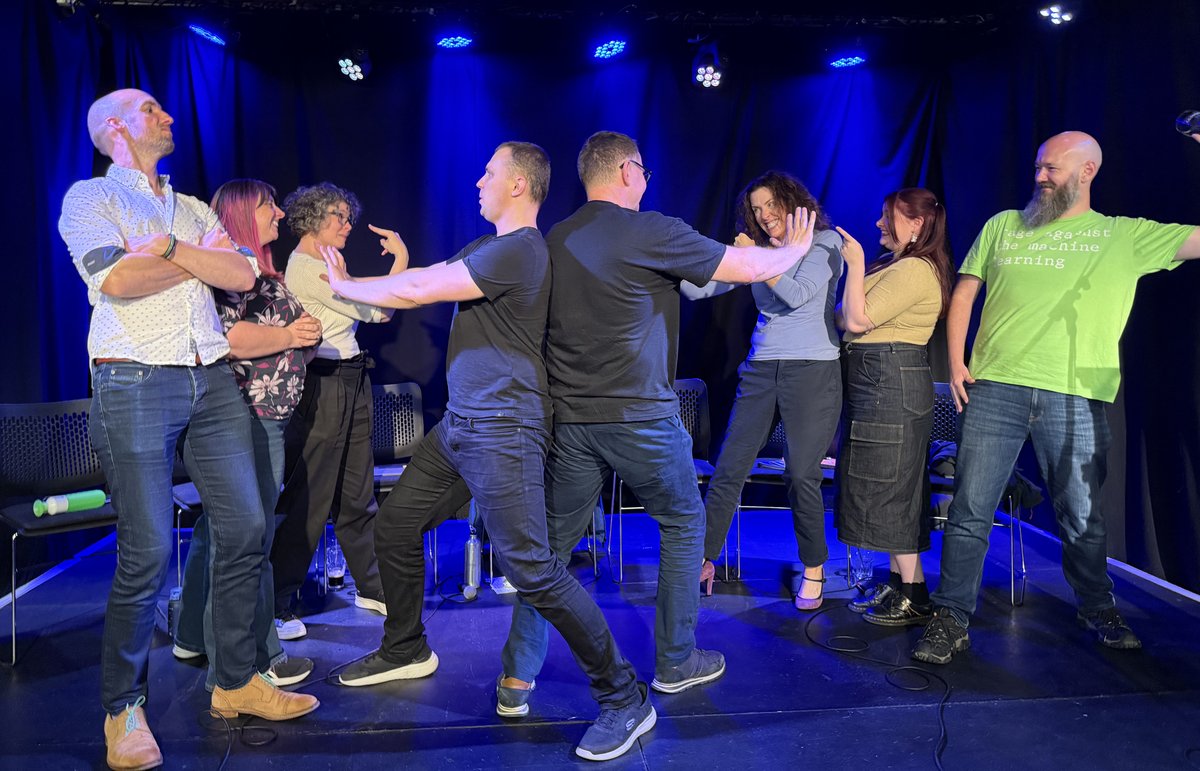
I was fortunate enough to be invited to participate in a debate raising money for Farset Labs, a cause obviously close to my cold cynical heart. Will GenAI Revolutionise Our Lives For The Good In The Next 5 Years is top tier troll-bait from Garth and Art, and I’m very grateful to have shared the stage with the 5 other speakers. Even the lanky english one. I was particularly impressed by my teammates in their very human-led approach to this question (although everyone was great!) ...

Lots of people have written about the impact of generative AI on the world of software engineering, and while I write this I’m fighting with CoPilot to stop filling out the rest of the sentence. Gimme a second… … That’s better. Anyway. This is just a blurb/brain-dump of a shower-thought. Don’t come to me for deep insightful stuff about the productivity gains about Generative AI in Software Development, or whether it will be the end of ‘Juniors’ in software engineering, or how we’re going to grow juniors in future. ...

Note: The continuing adventures of ‘a dozen people asked what I thought about a new AI model in work so I put them together and republished it a few months later when I got a quiet weekend’… So, Deepseek stripped billions from the market on Monday. Do we care? My 2c is that this is a fantastic series of innovations on the core design of LLMs, and based on those innovations, I wouldn’t be surprised if the training costs quoted as being in the mid-to-high-single-digit-millions-of-dollars are around the right order of magnitude for this (assuming you already had the team expertise of a PhD fueled quant-hedge fund in house and didn’t pay them SV salaries). ...

Introduction This document outlines an AIOps Maturity Model to help organizations assess and improve their Machine Learning Operations capabilities. It came from my own frustration that there weren’t any models that fit the real experience of end-to-end data science and operations relationships that covered both ‘conventional’ ML, and practically discussing LLM based systems and how completly differently you have to think about them. This was originally published internally around May ‘24 and then presented at NIDC as an ‘Eye Test Model’, and I promised that I’d eventualy publish it; this is it, dusted off and tidied up for public consumption. ...
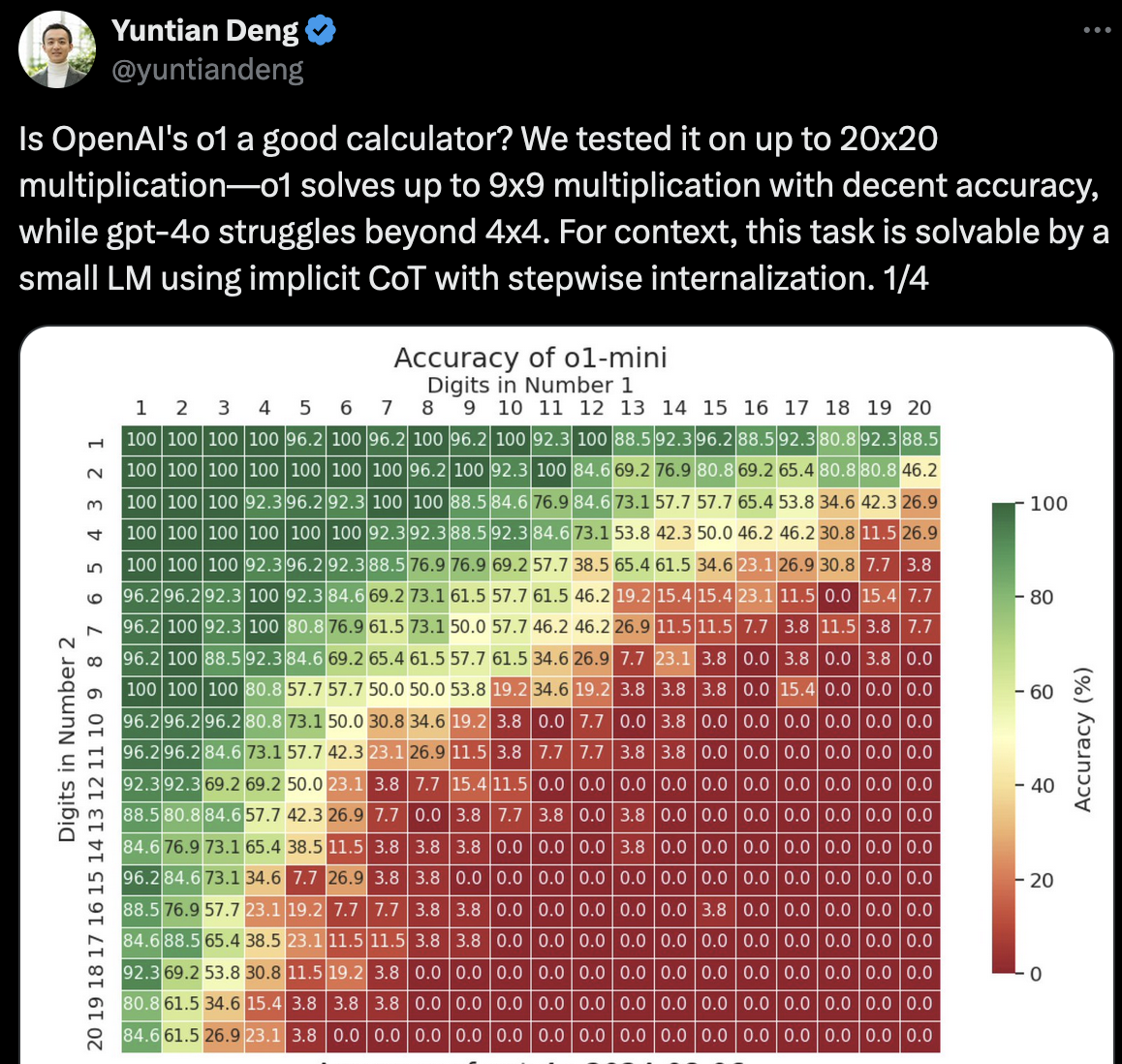
Is LLM Smarter than a 12 year old? Had a few people ask about the o1 models; at work we’ve requested preview access from Microsoft to get them added to our internal LLM Gateway, so we’ll just wait and see, but there’s been some interesting discourse on it so far. My 2c is that this is OpenAI trying to take the chain-of-thought (aka ’talking to yourself’) in house rather than people doing the intermediate steps themselves. (That means, instead of just running the token prediction, it’s a repeated conversation with itself, with OpenAI providing the ‘inner monologe’ and just magically popping out the answer). This is fine in principal, and is how we do multi-shot RAG among other things, but the two(three) critical parts of this for me are ...